
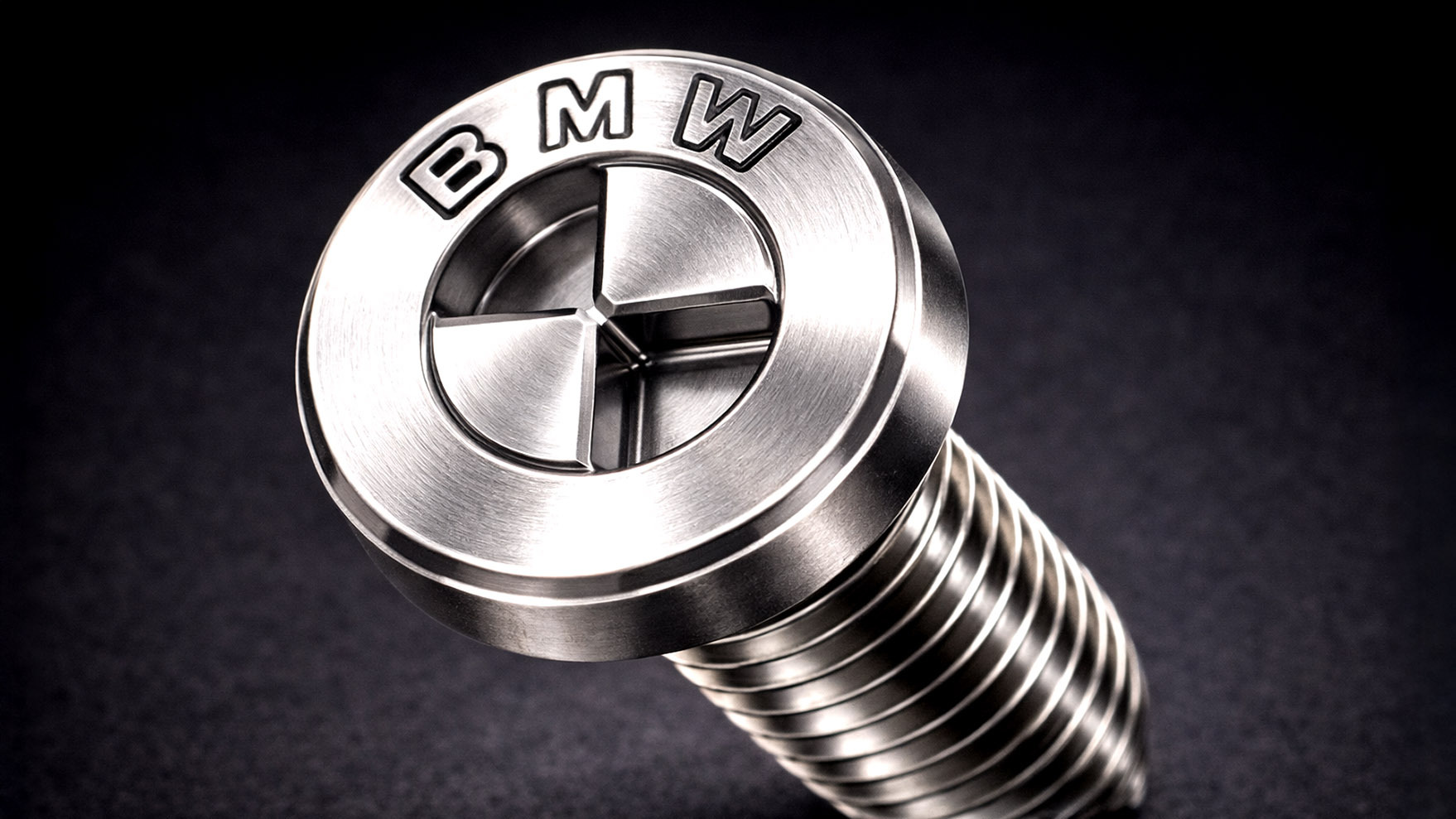
BMW’s Patented Roundel Tire Bolts: A New Frontier in Fastener Design and Automotive IP Strategy
In the ever-evolving landscape of automotive engineering, even the smallest components can reveal big trends. In late 2025, BMW garnered industry attention by filing a patent for a proprietary fastener design, a roundel-shaped screw head that would require a specialized tool for installation and removal. While headlines have simplified the discussion as “new tire bolts,” the patent itself focuses on a unique screw head geometry with implications for tool-specific fasteners, branded hardware, and vehicle service ecosystems.
What BMW’s Fastener Patent Actually Covers
According to reporting on the patent publication, BMW’s design builds the drive interface, the part of the bolt that a tool engages, around its iconic roundel logo. Instead of conventional hex, Torx, or spline drives, the geometry divides the circular top into four distinct quadrants that require a matching, proprietary driver to properly engage the fastener. This design appears in publicly available patent illustrations and schematics, suggesting multiple variations including socket, flat, and rounded head forms.
One of the most detailed summaries comes from Repairer Driven News, which notes that the patent specifically contemplates using the roundel-inspired drive structure in areas of a vehicle where preventing unauthorized removal is a priority, including interior structural connections.
Importantly, although media discussions often reference wheel or tire bolts, the patent does not explicitly limit the design to wheel applications. The strength of the concept lies in its mechanical exclusivity: the roundel drive cannot be actuated with standard tool sets, signaling a shift toward tool-controlled fasteners in automotive hardware.
Why the Patent Matters for OEM Strategy and IP
From an intellectual-property perspective, this patent demonstrates how automakers can leverage fastener design as a strategic asset. By patenting a proprietary screw head that requires a specific tool, BMW can influence several dimensions of the aftermarket and service ecosystem:
- Branded Hardware as IP: A fastener that visibly incorporates corporate identity becomes more than a mechanical part; it becomes a brand-linked design element potentially protected by both utility and design patents.
- Tool-Specific Control: Requiring a unique driver to remove or tighten fasteners allows manufacturers to guide who can service certain components. This can help maintain torque standards, reduce improper servicing, and create aftermarket leverage.
- Aftermarket and DIY Impact: Industry commentary, such as the analysis from Autoblog, highlights how such proprietary fasteners can limit the ability of independent mechanics and DIY enthusiasts to work on vehicles without specialized tooling. Although this design exists only as a patent application and has not yet been used in production vehicles, it reflects growing trends in automotive component IP.
Roundel Screws in Broader Automotive Context
Other credible outlets analyzing the patent confirm the roundel drive is a departure from standardized fasteners that dominate vehicle assemblies. Autoblog’s reporting on the concept underscores that, while the design is innovative, it also signals a broader shift in OEM strategies toward proprietary mechanical interfaces.
This trend aligns with broader industry trends in which manufacturers increasingly use patent-protected hardware, diagnostic locking, and branded tools to shape post-sale service channels and preserve product integrity.
Beyond the Patent: Practical and Legal Considerations
Even if the roundel screw head never appears on a production vehicle, the patent remains notable. It underscores how automotive manufacturers are leveraging mechanical design and proprietary interfaces as part of a broader approach to component access, branding, and vehicle servicing.