
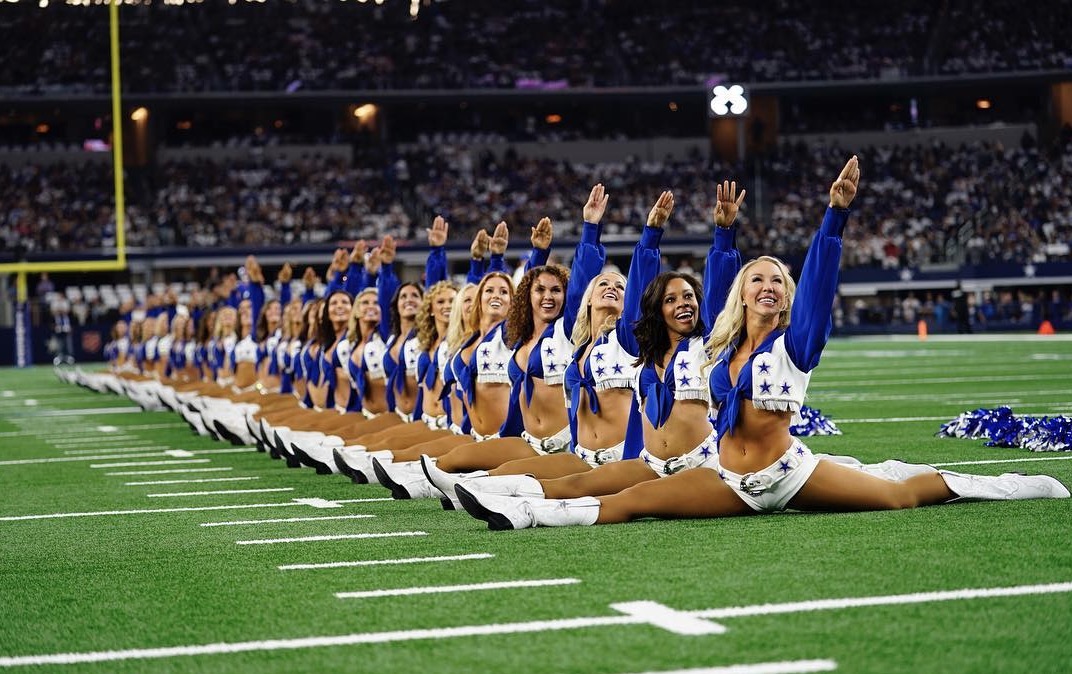
Can You Trademark a Uniform? Dallas Cowboys Cheerleaders Take on My Chemical Romance
What happens when a rock band brings one of the most recognizable uniforms in sports onto the concert stage?
Apparently, a trademark lawsuit.
The Dallas Cowboys Cheerleaders are at the center of a new legal dispute with rock band My Chemical Romance and concert promoter Live Nation over performers wearing costumes resembling the cheerleaders’ iconic blue-and-white uniforms.
The controversy raises an interesting legal question: Can a uniform be protected under trademark law, and when does using a recognizable look cross the line into infringement?
Why Are the Dallas Cowboys Cheerleaders Suing My Chemical Romance?
During My Chemical Romance’s October 21, 2026, performance at the Hollywood Bowl in Los Angeles, backup dancers appeared wearing outfits resembling the Dallas Cowboys Cheerleaders’ signature uniforms.
According to reporting by the Los Angeles Times, the performers wore white boots, white shorts, blue blouses, and white vests decorated with blue stars.
The dancers appeared during the band’s song “Teenagers” and later participated in a theatrical sequence involving prop weapons and a staged gunfight.
Pro Silver Star Ltd., the company that owns the Dallas Cowboys Cheerleaders brand, alleges that the costumes were so similar to the cheerleaders’ uniforms that audience members and social media users believed the performers were actually affiliated with the team.
The company also argues that the violent theatrical sequence could damage the reputation associated with its brand.
After sending a cease-and-desist letter on October 22, Pro Silver Star pursued legal action against My Chemical Romance and Live Nation, seeking to prevent the costumes from appearing in future performances.
The claims include trademark infringement, false endorsement, and trademark dilution by tarnishment.
These remain allegations, and the dispute has not been finally resolved.
Can You Actually Trademark a Uniform?
Yes, under certain circumstances.
Trademark protection isn’t limited to business names and logos. It can also extend to distinctive visual elements that identify the source of goods or services.
This type of protection is commonly called trade dress.
Trade dress can include the overall appearance of a product, packaging, or other distinctive visual features that consumers associate with a particular business.
For example, a recognizable combination of colors, shapes, patterns, and design elements may function as a brand identifier.
The U.S. Patent and Trademark Office (USPTO) explains that trademarks help consumers identify and distinguish the source of goods or services.
In the Dallas Cowboys Cheerleaders’ case, the question is whether the distinctive uniform design is legally protected and whether the band’s use violates those rights.
Importantly, not every uniform or costume qualifies for trademark protection. The design must satisfy applicable legal requirements, and the scope of protection depends on the particular mark and circumstances.
What Is Trademark Infringement?
Trademark infringement generally involves unauthorized use of a trademark in a way that is likely to cause confusion about the source, sponsorship, or affiliation of goods or services.
Under the Lanham Act, 15 U.S.C. § 1125(a), certain misleading uses of names, symbols, and other designations may create liability for false association or false endorsement.
In this dispute, Pro Silver Star alleges that concertgoers believed the performers were actual Dallas Cowboys Cheerleaders or that the organization had approved their appearance.
That alleged confusion is an important part of the company’s case.
But simply resembling a recognizable brand does not automatically establish infringement. Courts must consider the relevant facts and legal standards.
What Does Trademark Dilution by Tarnishment Mean?
The lawsuit also raises another concept: trademark dilution by tarnishment.
Unlike traditional trademark infringement, certain dilution claims involving famous marks do not require proof of likely consumer confusion.
Tarnishment generally concerns an association that harms the reputation of a famous trademark.
Under federal trademark dilution law, owners of qualifying famous marks may seek protection against certain uses that impair a mark’s distinctiveness or harm its reputation.
Here, the Dallas Cowboys Cheerleaders’ owner argues that associating its recognizable uniform with a staged violent scene threatens the goodwill attached to the brand.
Whether that argument succeeds depends on the applicable legal requirements, evidence, and potential defenses.
But What About Artistic Expression?
This is where the dispute becomes particularly interesting.
My Chemical Romance’s performance is part of a theatrical concert production, raising questions about how trademark protections interact with artistic expression.
Trademark law does not automatically prohibit artists from referencing recognizable brands, and the First Amendment may protect certain expressive uses.
However, artistic expression does not provide unlimited immunity from trademark claims.
Courts may consider whether a use functions as a designation of source, suggests sponsorship or endorsement, or otherwise falls within the scope of trademark law.
The distinction can be complicated, particularly when recognizable branding appears in music, films, costumes, or other creative works.
In this case, the Dallas Cowboys Cheerleaders’ owner has emphasized that it is not seeking to change the band’s music, choreography, or overall message. Its objection is specifically to the use of the disputed uniforms.
What Happens Next?
Pro Silver Star has requested a temporary restraining order (TRO) and injunctive relief.
A TRO is a short-term court order that may temporarily restrict certain conduct while a dispute proceeds.
The company wants to prevent My Chemical Romance from using the disputed costumes during its remaining Hollywood Bowl performances, scheduled for October 30 and 31.
A hearing on the emergency request was scheduled for October 27.
The company is also seeking monetary damages and longer-term relief.
Whether the court grants temporary restrictions—and whether the trademark claims ultimately succeed—remains to be determined.
What Can Businesses Learn From This Dispute?
Although the lawsuit involves a famous cheerleading squad and a major rock band, the underlying issues apply to businesses of all sizes.
A company’s brand identity can extend beyond its name or logo. Distinctive designs, packaging, and other recognizable visual elements may also have legal significance.
At the same time, trademark rights have limits. Not every resemblance amounts to infringement, and context matters when determining whether a particular use violates another party’s rights.
For businesses developing marketing materials, products, or promotional campaigns, understanding those distinctions can help reduce the risk of unexpected trademark disputes.
The Bottom Line
The Dallas Cowboys Cheerleaders’ dispute with My Chemical Romance demonstrates how a recognizable visual identity can become the subject of trademark litigation, even when it appears as part of a concert performance.
The case also highlights the tension between protecting valuable brands and allowing creative expression.
As the litigation unfolds, the central questions will include the scope of the cheerleaders’ trademark rights, whether the costumes create legally significant confusion or dilution, and how artistic expression factors into the analysis.
Griffith Barbee represents businesses and individuals in trademark and intellectual property litigation. If you have questions about protecting your brand or responding to allegations of trademark infringement, contact our team to discuss your legal options.