
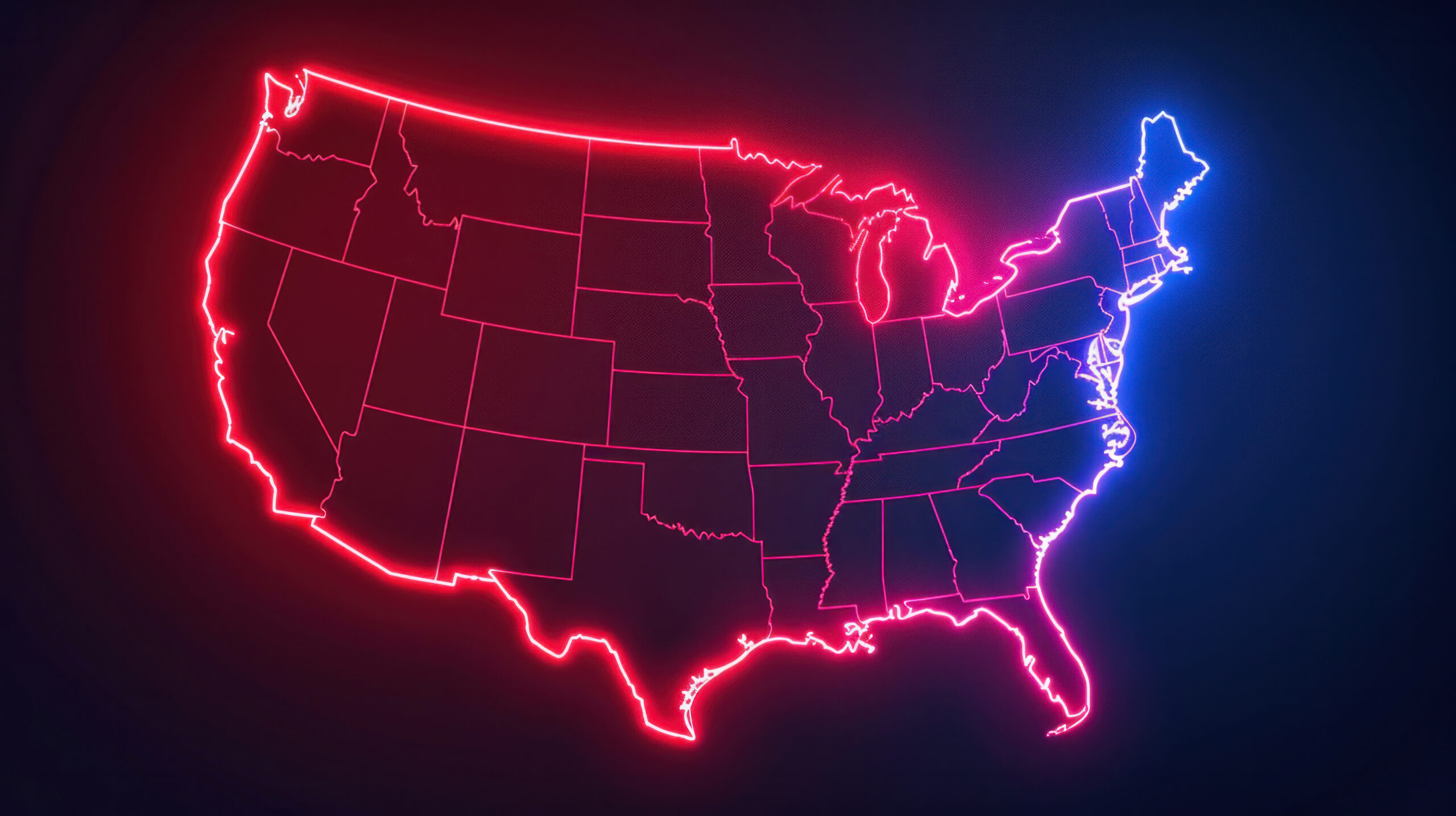
Trademark Law Stops at the Border: Ninth Circuit Enforces Abitron’s Limits
The U.S. Court of Appeals for the Ninth Circuit recently issued one of the first appellate decisions applying the Supreme Court’s 2023 ruling in Abitron Austria GmbH v. Hetronic International, Inc. The July 15 decision in Doctor’s Best, Inc. v. Nature’s Way Products, LLC confirmed that the Lanham Act’s trademark infringement provisions “extend only to claims where the claimed infringing use in commerce is domestic,” and that confusion among foreign consumers is irrelevant under U.S. law.
This decision offers essential clarity for businesses navigating the complex intersection of global commerce and U.S. trademark law, while demonstrating practical strategies for companies.
The Dispute: Similar Names, Similar Products, Different Markets
The dispute revolves around two supplement companies with confusingly similar product lines. Nature’s Way Products (NWP), a Wisconsin-based company, has sold products under its well-known Nature’s Way label in the United States since 1969. Doctor’s Best (DB) created a competing Nature’s Day line of supplements, manufacturing them in California with English-language labels to meet U.S. food regulations—but selling them only in China, South Korea, and Taiwan.
When DB tried to register Nature’s Day as a U.S. trademark in 2023, NWP opposed the registration and counterclaimed for infringement under the Lanham Act. DB then filed a preemptive lawsuit for a declaratory judgment of non-infringement.
SCOTUS Sets the Standard: Abitron’s Two-Step Test
While the case was pending, the Supreme Court decided Abitron. In that decision, the Court had to interpret whether the Lanham Act’s infringement provisions (§1114(1)(a) and §1125(a)(1)) extend outside U.S. borders—specifically, whether they cover trademark use abroad—or if they only apply when the alleged infringing “use in commerce” occurs within the United States.
Ultimately, the Court found that the Lanham Act does not contain a clear statement of extraterritoriality from Congress, meaning private trademark suits can only proceed when the alleged infringing “use in commerce” is domestic. This framework overruled earlier circuit tests. that allowed liability for foreign sales affecting the U.S. Thus, the Supreme Court’s decision in Abitron established a restrictive two-step test for the extraterritorial application of federal laws:
- First, “courts must determine whether the statutory provision at issue is extraterritorial.” If the answer is “no,” courts proceed to step two.
- Second, courts must resolve “whether the suit seeks a (permissible) domestic or (impermissible) foreign application of the provision. To prove that a claim involves a domestic application of a statute, plaintiffs must establish that the conduct relevant to the statute’s focus occurred in the United States.”
Ninth Circuit Applies Abitron: No U.S. Confusion, No Infringement
In Doctor’s Best, the Ninth Circuit affirmed. Writing for the panel, Judge Paez noted that Abitron clarified that the Lanham Act’s infringement provisions “extend only to claims where the claimed infringing use in commerce is domestic.” The court accepted DB’s argument that the only actionable domestic conduct was transporting Nature’s Day products from its California factory to shipping carriers. Because DB sold the goods exclusively overseas, there was no evidence that any of its U.S. transport activities ever reached American consumers. The court therefore concluded that NWP could not meet its initial burden of showing a likelihood of consumer confusion regarding that conduct and that no rational jury could find infringement.
Nevertheless, the court continued its evaluation of the traditional eight-factor Sleekcraft test for the likelihood of confusion and identified decisive gaps: DB’s products were sold exclusively overseas. Conversely, NWP’s goods were sold only in the U.S., with no shared marketing channels or customers. Although the Nature’s Day mark resembles Nature’s Way and targets similar products, the court did not find any evidence of actual or potential confusion among U.S. consumers. Because Abitron requires that confusion occur domestically, the court concluded that NWP’s reliance on hypothetical confusion abroad could not establish a triable issue.
Judge Ikuta’s Concurrence: Transport May Constitute Use in Commerce
While Judge Ikuta ultimately agreed with the judgment, she wrote separately to clarify that DB’s transport of Nature’s Day supplements in the U.S. did constitute a domestic use in commerce. In her view, the majority appeared to suggest that no domestic use occurred. She emphasized that domestic transport could qualify as a use in commerce if a plaintiff meets its burden by showing actual confusion among U.S. consumers. Because NWP could not demonstrate that the domestic transport of goods caused any confusion among U.S. consumers, it failed to meet its burden. Judge Ikuta’s concurrence underscores the importance of the Lanham Act’s requirements while providing some practical guidance on what needs to be shown when bringing a claim.
Business Lessons: Navigating Trademark Law in a Global Economy
The Ninth Circuit’s decision shows how narrowly courts might interpret the Lanham Act after Abitron. Three key lessons emerge:
- Focus on U.S.-based conduct and impact. Courts will examine only the defendant’s activities that occur within the United States and disregard foreign sales or marketing. Domestic conduct—such as manufacturing or shipping—may be actionable, but only if it results in confusion among U.S. consumers. Simply routing products through the U.S. is not enough to trigger liability.
- Domestic consumer confusion is essential. Under Abitron, confusion among foreign consumers is not relevant. Trademark infringement must involve a likelihood of confusion within the United States to be actionable.
- Traditional likelihood-of-confusion factors remain relevant—domestically. While the Sleekcraft factors still apply, courts focus on their application to U.S. markets. The absence of overlapping markets, U.S.-based consumer confusion, or shared marketing channels can weigh heavily against a finding of infringement. Businesses should assess these factors with an emphasis on domestic consumer perception.
Please feel free to contact Griffith Barbee to discuss your trademark needs. Our team is dedicated to helping businesses in Dallas and beyond safeguard their intellectual property.