
When Does Parody Become Trademark Infringement? The Buc-ee’s “Buc-Off” Challenge
Buc-ee’s is known for many things: Beaver Nuggets, spotless restrooms, sprawling travel centers, and a fiercely protected beaver logo.
Now, comedian John Oliver is testing just how far that protection extends.
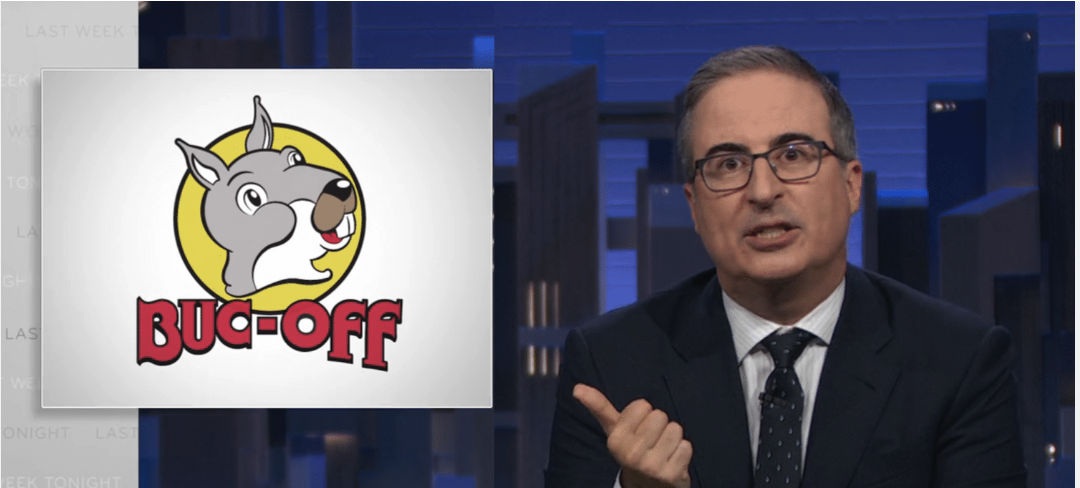
On a recent episode of Last Week Tonight, Oliver took aim at Buc-ee’s history of trademark enforcement and unveiled “Buc-Off,” a parody brand featuring a cartoon squirrel named Mr. Nutterbutter inside a yellow circle, an obvious nod to Buc-ee’s familiar branding. The show went a step further, launching a website and selling Buc-Off merchandise.
That raises an interesting trademark question: When does parody of a famous brand cross the line into trademark infringement?
Trademark Law and Consumer Confusion
At the center of most trademark infringement cases is a relatively straightforward question: Is the use of a mark likely to cause consumers to be confused about the source, sponsorship, affiliation, or approval of goods or services?
Under the federal Lanham Act, courts consider factors such as the strength and similarity of the marks, similarity of the products or services, evidence of actual confusion, and intent.
Parody complicates that analysis because a successful parody often needs to imitate recognizable elements of the original. Without enough similarity, the joke does not work.
But simply calling something a parody does not automatically defeat a trademark claim, particularly when the parody moves beyond commentary and into the marketplace.
The Supreme Court Weighed In
The U.S. Supreme Court addressed this issue in its 2023 decision, Jack Daniel’s Properties, Inc. v. VIP Products LLC.
The case involved “Bad Spaniels,” a dog toy designed to resemble a bottle of Jack Daniel’s whiskey, replacing familiar elements of the company’s branding with dog-related jokes.
The Supreme Court rejected the argument that parody automatically avoided traditional trademark analysis. Instead, it emphasized that VIP was using elements of Jack Daniel’s trademarks as a trademark for its own product.
When another company’s mark is used as a designation of source for a defendant’s own goods, traditional likelihood-of-confusion principles still apply.
Parody may affect whether consumers are actually likely to be confused, but it is not an automatic shield from trademark infringement.
Why the Buc-Off Merchandise Matters
If Last Week Tonight had simply displayed a spoof Buc-ee’s logo while criticizing the company, the First Amendment considerations would be relatively apparent.
Selling merchandise adds another layer.
Buc-Off branding appears on shirts, hats, mugs, pajamas, and other products offered to consumers. That raises a key question under Jack Daniel’s: Is Buc-Off merely part of the expressive parody, or is the branding also functioning as a source identifier for merchandise?
A court considering an infringement claim would likely examine how the marks are being used and whether consumers could believe Buc-ee’s is affiliated with, sponsored, or approved the products.
Buc-ee’s Has a History of Protecting Its Brand
The Buc-Off stunt is particularly notable because Buc-ee’s has a reputation for actively enforcing its intellectual property rights.
The company has pursued trademark disputes involving similar names, animal mascots, and branding elements, including recent litigation involving apparel featuring a beaver logo.
That history highlights the balance trademark owners regularly face. Companies have good reason to monitor and protect valuable brands, but not every reference to a trademark constitutes infringement. Parody, commentary, criticism, and other expressive uses can raise significant First Amendment considerations.
Parody Is Not a Trademark Loophole
The Buc-Off campaign offers an entertaining example of a serious issue businesses face regularly.
There is no simple rule that parody is protected, or that using another company’s branding on merchandise necessarily constitutes infringement. Context matters.
Businesses considering referential or humorous branding should evaluate whether they are commenting on another brand or using elements of that brand to identify their own products.
Trademark owners face the opposite question: Does the unauthorized use genuinely create consumer confusion, or is the joke itself making clear that the original brand is the target rather than the source?
As Jack Daniel’s makes clear, a joke can still be subject to trademark law.
Whether consumers understand the joke may be part of what determines the outcome.
If your business is facing a trademark dispute or has questions about protecting its intellectual property, contact our team to discuss how we can help.